Childproofing your home is a key step in creating a safe space for your little one to explore. Babies and toddlers are naturally curious, turning ordinary household items into potential hazards. Here’s a practical guide to childproofing your home efficiently, with a focus on UK-specific advice.
Where to start
The moment your baby starts crawling, it’s like they’ve discovered a hidden superpower. Suddenly, the bookshelf looks like Everest, and the TV stand becomes a perfect climbing frame. Step one is to secure anything heavy. Furniture anchoring kits are your new best friend. Trust me, you’ll thank yourself the first time you see your toddler attempt to scale a dresser.
While you’re at it, those sharp corners on coffee tables are practically magnets for baby heads. Corner protectors are a simple way to soften the inevitable bumps and save yourself from constant heart attacks.
The Kitchen Safari
Bathroom Blunders
Bath time might be fun, but the bathroom is full of hazards. Toilet locks are a must because toddlers have a knack for exploring where they shouldn’t. Keep medicines and toiletries stored high in childproof cabinets, and make sure your water heater (max tap temperature) is set below 46°C to avoid scalds.
A quick tip: never leave your baby alone in the bath. Not even to grab that adorable towel you forgot.
Nursery Know-How
The nursery should be the one room where you can breathe easy. Start with the crib by keeping it simple. No heavy blankets, pillows, or stuffed animals. Secure dressers with furniture straps because we’ve all seen those videos of toddlers pulling them over, and no one wants that.
Blinds are another sneaky danger. Keep cords tied up or invest in cordless options to avoid strangulation hazards.
Door Drama
Doors might seem harmless, but they can cause trouble. Protect tiny fingers from getting caught with door guards and use hinge covers to shield little hands from hinges. These small additions make a big difference.
The Stairway Challenge
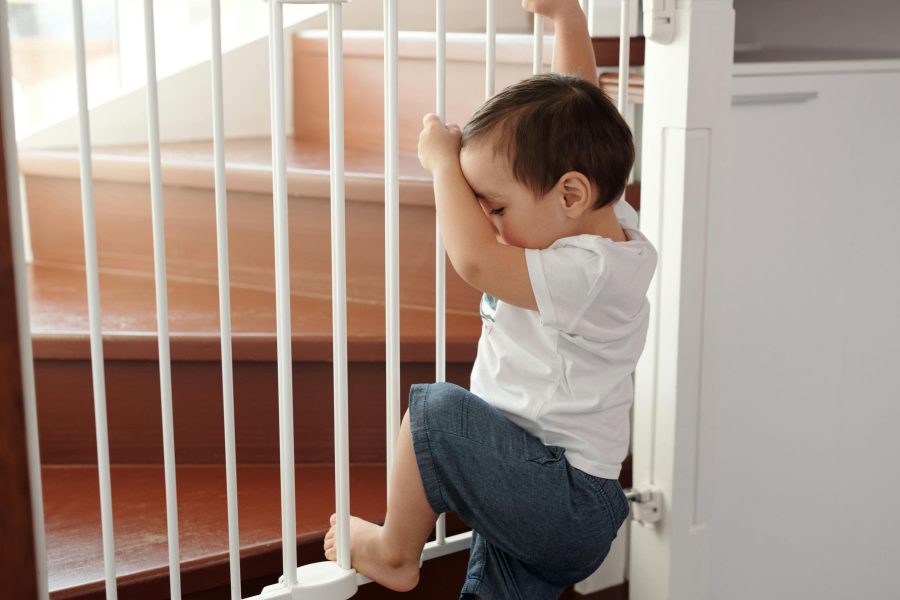
Stairs are the ultimate toddler temptation. Install safety gates at both the top and bottom to stop any daring attempts to climb. Securely mounted gates are the way to go for stability. Tension gates should never be used at the top of the stairs as the bottom bar can pose as a trip hazard.
A Quick Note on UK Electrical Safety
UK plug sockets are designed with built-in safety shutters, so additional socket covers are unnecessary. Ensure your sockets conform to BS 1363 standards, and you’ll have peace of mind.
Final thoughts
Childproofing your home is an ongoing process. It’s about tackling the biggest risks first and making adjustments as your child grows. No matter how much you prepare, your child will find new ways to surprise you. Embrace the chaos because every bump and bruise is part of the adventure of growing up.