
When I was pregnant with my daughter, I remember staring at endless baby shopping lists, convinced I needed to remortgage the house just to afford nappies. There were gadgets I couldn’t pronounce, wipes warmers (still don’t get those), and so many conflicting opinions that my brain nearly short-circuited. Fast forward a few years, and after going through it all again with my son, I’ve learned what’s worth the money, what sits gathering dust, and which things genuinely made life easier.
This is the list I wish I had. It’s honest, mum-tested, and full of real-life favourites. I only recommend things I’ve actually used or genuinely rate.
Let’s make the baby shopping process a little less overwhelming.
Postnatal Care
First things first, let’s make sure you’re looked after. Your body has just done something pretty incredible, and recovery deserves just as much planning as the rest of your baby prep. One of the things I was most grateful for was setting up a little postnatal care caddy before I even left for the hospital. I had one upstairs and one downstairs, filled with everything I might need in those early hazy weeks, no frantic rummaging through drawers, no awkward waddles around the house trying to find nipple cream or fresh pads. Just everything in reach when I needed it.
Here are the bits I genuinely found useful:
- Maternity pads
I stocked up on Lil-lets maternity pads, and honestly, I never had a single leak. They felt secure, didn’t bunch up, and just quietly got on with the job, exactly what you want when everything feels a bit upside down. - Nursing bras
I wore soft cotton ones round the clock. The stretch made life so much easier during cluster feeding marathons, and the ones I used from Momcozy were comfy enough to sleep in too. - Loose shirts (preferably with buttons)
These were a staple. I lived in button-downs during the early weeks, anything I could quickly open for feeding without feeling exposed. They also made me feel slightly more human than the stretched-out vest top and PJ bottoms combo. - Nipple cream
I kept a tube of No harm nipple balm in each caddy. It really helped take the edge off those first few days of soreness while everything adjusted. i found this one didn’t drag like some of the other brands. - Comfy pyjamas
Soft, stretchy, and ideally something that doesn’t scream “these are actually my pyjamas” in case you answer the door to a midwife visit or a rogue Amazon delivery. - Water bottle
With my second, I bought a Stanley Cup and it was a game-changer. It kept me hydrated without endless trips to the kitchen, and the straw plus handle meant I could drink one-handed while feeding or rocking baby. No screw tops, no drama. - Full briefs
High-waisted knickers that didn’t dig into my C-section scar and felt really supportive were a must. The ones I used from Wealurre were soft, held up well in the wash, and didn’t ride up. - Spritz for Bits
This cooling perineal spray came highly recommended. I bought Spritz for Bits, but I didn’t end up needing it after my emergency C-section. That said, I passed it on to another new mum who was very grateful, and I’d definitely still have it ready if you’re planning a vaginal birth. - Peri bottle
This little squeezy bottle can make trips to the loo far less daunting after birth. I bought one by Frida mom and kept it ready in the bathroom. - Hot water bottle
Mine lived in my caddy and came out regularly for cramps, general soreness, or just when I needed a bit of comfort. It’s old-school but it works.
Need ideas for packing your hospital bag? Here’s my full checklist.
Out and About
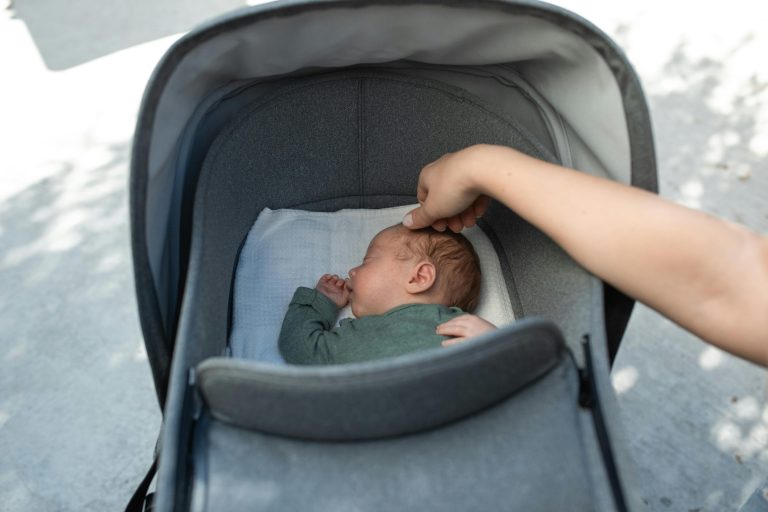
This is where you really feel the pressure to “get it right.” Travel systems, car seat compatibility, collapsible frames that promise to fold one-handed while you hold a crying newborn and your dignity, it’s a lot. After two kids and a few too many pram-related meltdowns (mine, not theirs), I’ve figured out what actually matters.
- Sling
In the early days, this was hands down one of the best things I owned. I used one by Funki Flamingo, which was soft, stretchy, and perfect for that newborn snuggly phase. It gave me the freedom to move around the house while keeping baby close, especially helpful when I needed to make lunch one-handed or chase a toddler. - Baby carrier
When the sling phase passed, we moved on to a more structured carrier. I used Ergobaby Embrace, which gave more back support and was easier for longer walks or outings. - Pushchair
I went with a Bugaboo, it was perfect for someone with a small car. It was really lightweight and brilliant for navigating city life. If you’re more countryside-based, the same Bugaboo also has an option with bigger wheels for rougher terrain. - Changing bag
We used one similar to the Ruvalino bag (the one I had has been discontinued), it had enough compartments to keep me from turning into a bottomless handbag monster. Easy to wipe clean and big enough to hold nappies, spare clothes, snacks, and the all-important muslins. - Car seat and Isofix base
I always recomend using an infant carrier car seat rather than the ‘from birth to 4 years’ for newborns, this is due to those car seats having poor fit for very small babies, something like the Maxi Cosi Pebble is perfect for that first year. Having an Isofix base is a life saver, I cannot stress enough how helpful it is to have a base that just clicks the seat into place without faffing with seatbelts when you’re half-asleep. - Mirror for the back seat
I liked being able to glance back and see baby was okay, especially during those early solo drives. Ours from Mirrorsafe strapped onto the headrest and stayed put without needing adjustments. - Pram toys
I clipped on a couple of sensory toys from Nuby that could keep baby entertained while out and about. Not essential, but handy for keeping little hands busy during walks or while queuing for coffee. - Travel cot
We didn’t use this right away, but once we started visiting family or staying overnight, the Hauck travel cot became one of our most-used items. It folded down small and had a bag for easy storage. - Portable nappy disposal unit
We took a Munchkin portable bin with us on trips so we didn’t have to stash used nappies in plastic bags in someone else’s bathroom. You’re welcome, extended family. - Baby on board sign
Simple but helpful. Ours stuck to the back window with a suction cup, and it just gave me a bit more peace of mind that people might be a little more patient if I was driving like a new mum who hadn’t slept in three weeks.
Sleeping
Sleep is the holy grail of parenting. Or more accurately, the lack of it becomes the defining theme of those early weeks. While no product guarantees more sleep (sorry!), having the right setup can definitely make the process smoother, for both you and your baby.
- Moses basket
We kept a Moses basket downstairs for daytime naps. It meant baby could rest nearby while I got on with bits around the house, and it avoided the endless up-and-down trips during the day. - Next to Me crib / bassinet
Upstairs, we had a Next to Me crib attached to our bed. I absolutely loved this setup. The side folded down and sat flush against our mattress, so I could reach baby easily during night feeds without having to fully get up. It made those first few months of co-sleeping (but safely) much more manageable. - Baby monitor
The Nanit Pro was one of our favourite investments. It tracked sleep and breathing without anything electronic going on the baby, using a clever camera and special pattern on the swaddle or sleeping bag. It gave us so much peace of mind, and we never had a single false alarm. The Nanit also doubles as a white noise machine and nightlight, which makes it a brilliant multi-use addition to the nursery setup. - Swaddles
We used swaddles which were compatible with the Nanit Pro monitor. They helped reduce the startle reflex and gave baby that snug, womb-like feeling, especially useful in the early weeks when their arms kept flinging around like startled octopuses. - Sleeping bags
As baby got older and we moved away from swaddling, we transitioned to sleeping bags. We made sure to get ones that were also compatible with the Nanit breathing tracker. The Nanit sleeping bags were lovely quality too. - White noise machine
Ours came built into the Nanit, but we also had a standalone one from Dreamegg which we used during naps or when travelling. It became part of the wind-down routine and honestly helped all of us wind down a little. - Night light
A soft, dimmable night light from Hatch was perfect for those early hours, enough to see what I was doing without waking everyone up. It can be controlled using your phone which was a bonus. - Blankets
We had a few breathable cellular blankets for supervised naps and outings, but we avoided using them for sleep to follow safe sleep guidance. - Cot bed
Once baby was ready to move into their own room, we moved them into a cot bed from Babymore. Ours had a drop-side feature, which was honestly essential for me as a short mum, lifting baby in and out without straining my back was a game-changer. - Cot mattress
We chose a firm, breathable mattress that met all the safety standards. It felt reassuring to know baby was comfortable and supported, and it held up well as we transitioned to toddlerhood. - Waterproof mattress protectors
Trust me, get more than one. We used the ones from Cuddleco, and having a backup meant I wasn’t stripping the bed at 2 a.m. while half-asleep and crying. - Cot sheets
I kept a stash of fitted sheets in rotation, always something clean ready to go after a leaky nappy or spit-up incident.
Feeding

Feeding might feel like a small section, but it’s one of the biggest parts of newborn life, whether you’re breastfeeding, bottle feeding, or doing a bit of both. You’ll spend hours feeding in those early weeks, so anything that makes it more comfortable and more efficient is well worth having.
- Breast pump
I used the Spectra S1, which is a hospital-grade pump, and genuinely, it gave me the best output of all the ones I tried (and I tried a lot). It’s not hands-free, but it doesn’t need to be plugged into a socket while in use, which meant I wasn’t tied to one spot. The tubing setup actually gave stronger suction than some of the cordless, wearable options I tested. For me, it was worth that trade-off to get more milk and spend less time pumping. - Milk storage bags or pots
We used Lansinoh for both freezing and fridge storage. I’d write the date and time on each one (and occasionally a dramatic warning like “DO NOT TOUCH — GOLD!”). - Bottles
We used lansinoh bottles, which worked well for expressed breastmilk as the storage bottles were compatible with the teats, which made things much easier. - Bottle steriliser
I used Dr Browns two-in-one electric steriliser and dryer, which was a total win. Not only did it save time (no air-drying on a tea towel while hoping nothing got contaminated), but it also doubled as storage for sterile bottles during the day. Since it stayed closed and dry inside, I didn’t have to keep re-sterilising every time I needed one. Honestly, one of the most practical bits of kit I had on the kitchen counter. - Nursing pillow
I used the Momcozy one, which gave a nice bit of support across the front and helped reduce strain on my arms and shoulders during longer feeds, especially helpful at 3 a.m. when posture goes out the window. This was perfect for my C Section scar too as it took the pressure off the site - Privacy shawl
I had one from Comfy Cubs which folded neatly in the changing bag. To be honest, I didn’t always use it, but it was nice to have the option in public if I felt like I wanted some coverage. - Muslin cloths
You’ll never have enough. I had them tucked into every corner of the house. Aden + Anais did a great quality multi pack that washed well and didn’t go stiff after one spin in the machine. - Burp cloths
Slightly thicker and more absorbent than muslins. We used the ones from Comfy Cubs, one for every chair we ever sat in. - Sterilising tablets
I kept a pack of Milton tablets in the changing bag just in case we were out and needed to sterilise a dummy or bottle quickly. - Highchair
Okay, not an immediate newborn essential, but I really appreciated having this early on. We got the Tripp Trapp highchair, which has a newborn set that clips in so baby can join you at the table from day one. It promotes proper posture with a 90-degree angle for feeding and transitions into a toddler chair later on. My 4-year-old still uses hers daily. And it’s very aesthetically pleasing, which doesn’t hurt either.
Read more about weaning here: Genius Mealtime Hacks for Parents of Picky Eaters and Messy Toddlers
Changing
Changing nappies might not be glamorous, but it’s definitely something you’ll be doing a lot of, and usually at the worst possible moment. Having your setup sorted on both floors (or wherever you spend the most time) makes life much easier.
- Changing table or mat
We had one upstairs and one downstairs. For the downstairs mat, we added a little ribbon loop to the back so we could hang it on the back of the door when not in use, total space-saver. We also had portable changing mats that were perfect for using on the bed or sofa without risking baby wee soaking into your throws. - Nappy caddy
Honestly one of my favourite setup hacks. We had two caddies, one upstairs and one downstairs, fully stocked with nappies, wipes, nappy cream, spare vests, muslins, and even a snack for me if I was lucky. It saved so much time and stopped the endless up-and-down stairs routine. - Nappies
We used a variety of brands until we found the right one and kept a full stock in both caddies. I started with newborn size but quickly learned to keep the next size up on hand too because the growth spurts are real. - Wipes
I bulk bought Huggies wipes and kept a stash in every possible place, bathroom, changing bag, caddy, car, coat pocket. - Nappy cream
We used Matenium, and I kept one in each caddy to avoid the mid-change “where is it?!” panic. - Nappy bin
We had one upstairs and one downstairs, which sounds like a luxury until you’re holding a full nappy and can’t leave the baby unattended. The Tommee Tippee twist and click one as it sealed in smells and didn’t need emptying too often. - Cotton buds and cotton balls
These were great for those early days of belly button care and first nappy changes, especially before we moved on to using wipes full time. - Disposal bags
Handy for changes on the go or when guests were round and I didn’t want to subject them to the full nappy bin aroma. - Top and tail bowl
We used this for those gentle washes before daily baths became part of our routine. It was just a simple way to freshen up baby without getting them completely undressed.
Baby Care
You’ll suddenly feel like your baby’s personal spa manager. From baths and grooming to sniffles and temperature checks, these are the bits that made our everyday care routines easier and a lot less stressful.
- Thermometer
We used Braun Thermoscan 7, quick, accurate, and gave us peace of mind whenever baby felt a bit warm. I liked this one as many doctors use this one which gave me confidence in the reading. - Nail file
I went for an electronic nail file by FridaBaby rather than clippers. It was totally skin-safe, so I never had to worry about nicking tiny fingers. It came with a whole range of attachments that could be swapped out as baby got older, and it became one of those “I’ll just quickly do this while they’re feeding” kind of tools. - Nasal aspirator
So helpful during colds. I was glad we had the NoseFrida ready. A bit gross, yes, but a clear nose makes a massive difference to sleep and feeds.
- Baby brush
We used a soft-bristled brush from Tommee Tippee. Great for gently smoothing down baby hair and tackling cradle cap without scratching their scalp. - Baby bath
We used the Shnuggle Bath, and it was genuinely brilliant. The way it’s shaped means baby sits slightly upright, which gives you both hands free, no awkward one-handed balancing act. It doesn’t need loads of water and lasted us ages thanks to the generous size. - Bath thermometer
It wasn’t essential, but it did give me confidence, especially in the early days when I had no clue what “warm but not too warm” actually meant. Ours was from TensCare and gave a quick clear read. - Body wash and shampoo
We used Aveeno. Gentle on the skin and didn’t leave baby smelling like an over-perfumed doll. - Baby lotion
Not strictly necessary, but we did use it as part of a little bedtime massage, especially during dry weather. Aveeno was our go-to. - Medicines
It’s worth having a few basics at home so you’re not running out to the chemist at 10 p.m. Just a quick reminder, most medications can’t be used for babies under two months, so always check the box or ask your health visitor before giving anything.- Calpol
For when baby’s old enough and you really need it. - Teething gel
I kept this on standby even before teeth arrived, just in case those grizzly evenings were teething-related. - Saline spray or drops
Essential for unblocking little noses, especially in stuffy newborn days. - Medicine spoon or syringe
We had a few on rotation, the syringe that came with our Calpol ended up being the easiest for accurate doses.
- Calpol
Clothing
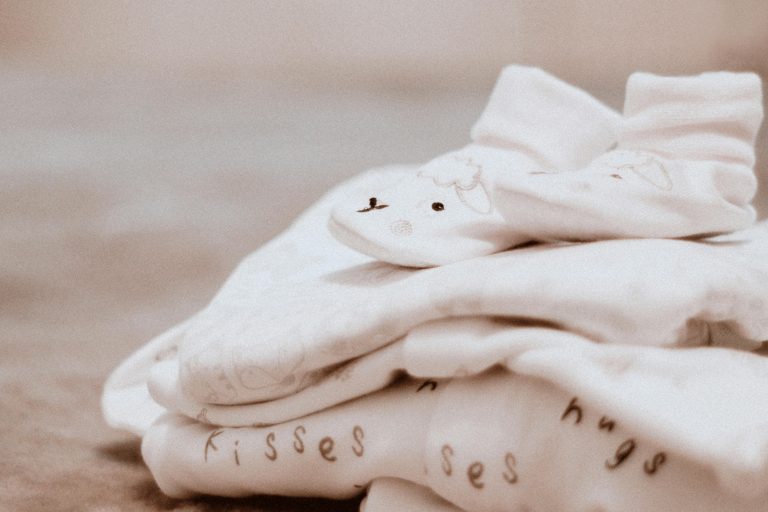
Tiny outfits are adorable, but the reality is your baby will spend most of the first few weeks in a rotating pile of vests and sleepsuits, often going through several a day thanks to milk leaks, nappy disasters, or an impressively timed sneeze just as the new outfit goes on. It’s less about fashion, more about comfort and speed.
Here’s what I’d actually recommend:
- Vests (bodysuits)
We stocked up on a mix of short-sleeved and long-sleeved ones in newborn and 0–3 month sizes. I always went for the envelope-style shoulders, much easier to pull down after a major poo explosion (rather than over the head, which nobody wants to do mid-disaster). - Sleepsuits / babygrows
This is what they’ll live in, really. Zip-up ones were so much easier for night changes, but the popper ones are often easier to find. I had a good stash from AdoraCub that were soft, washed well, and didn’t fade or go baggy. - Hats
We used these early on, especially in hospital and in those chilly newborn weeks. Just something soft and simple that fits snugly, not the ones that slide up and hover above the ears like tiny chefs’ hats. - Socks / booties
We had so many little socks and they still managed to vanish. Footed sleepsuits solved this problem most of the time, but I kept a few pairs of soft booties on hand for when we were out and about. - Cardigans / jumpers
A couple of soft layers were perfect for those in-between days, not warm enough for a full pramsuit, but definitely not bare-arm weather. I liked the button-front styles so you’re not wrestling anything over baby’s head. - All-in-one pramsuit / snowsuit
We had one of these for outdoor winter days. It’s worth noting that they’re not safe for car seat use, so we mainly used ours for pram walks. - Scratch mitts
Most of our sleepsuits had them built in, which I preferred, the separate ones always seemed to disappear or get pulled off. They were useful during those early flailing-arm phases. - A couple of ‘nice’ outfits
Totally optional. We had a few for visitors or photos, but otherwise it was all about cosy basics. I remember thinking I’d use all these tiny outfits and then realising I just wanted baby to be warm, comfy, and easy to change.
Toys

You really don’t need loads of toys in the newborn phase, your baby’s biggest obsession is your face. But a few well-chosen bits can help with development, tummy time, and giving you a few minutes to gulp a cup of tea without having to narrate your every move.
- Black and white cards or books
Babies love high contrast in the early weeks, and we used Banana Panda cards to pop in front of baby during nappy changes or tummy time. They stared at them like they were watching high drama. - Playmat or gym
Ours had a few hanging toys and a mirror, and it gave baby a chance to kick and swat while I hovered nearby pretending to tidy. I used Nuby one, and it folded up neatly when not in use. - Tummy time mirror
We had a soft, baby-safe mirror that could prop up during tummy time. It became part of our daily routine, and my son genuinely loved staring at the baby in the mirror, even if that baby never responded to his babbles. - Tummy time cushion
This helped prop baby up during tummy time in those early days when it still felt a bit awkward. I found this one supportive but not too bulky. - Baby bouncer
We used the BabyBjörn Bouncer, and it was brilliant. Super lightweight, folded completely flat, and easy to carry one-handed between floors. It supported baby from newborn to toddler and was designed to be ergonomic, giving proper head and neck support. The fabric cover was washable, and the natural bounce kept baby entertained without any need for batteries or buttons.
- Soft toys / comforter
We had a couple of soft comforters that were lovely for cuddles and bonding, just be sure not to use them in the cot or crib during sleep. Keep them for supervised time only.
Nursery
You don’t need a picture-perfect nursery set up from day one, your baby will likely be sleeping in your room for the first few months anyway. But having a space that’s calm, organised, and functional makes life a lot easier in the long run (and gives you somewhere to stash all the baby stuff when it starts taking over your house).
- Nursery chair
I didn’t realise how much I’d use this until I found myself doing endless night feeds, naps, and stories in the same spot. Bonus points if it rocks, swivels, or reclines, anything to help you settle in for a long feed without needing to stretch every 10 minutes. - Soft lighting
A warm, low-level lamp made middle of the night changes more manageable without waking everyone up. We used one by MEDE, and it had a dimmer option which was perfect for sleepy feeds or just checking on baby quietly. - Blackout blinds
Total game-changer. We used the Tommee Tippee blackout blind, which attaches easily to any window with suction cups. It was great for daytime naps and early bedtimes, and it meant we didn’t need to commit to blackout curtains while still figuring out the space. - Storage baskets or drawers
Babies come with an astonishing number of tiny clothes and bits, and having designated storage made things feel less chaotic. I used baskets alongside drawer organisers, which were honestly a lifesaver. I could roll up vests, leggings, and sleepsuits, and everything stayed neat and visible. No more discovering a stack of newborn clothes hiding at the back of a drawer when baby had already outgrown them. - Hanger organisers (by age)
These were especially useful after we got a ton of gifted clothes, many of them in bigger sizes. I used age-labelled dividers on the wardrobe rail so I could easily see which clothes were ready to use and which ones were for later. It meant nothing got missed or forgotten, and I wasn’t trying to squeeze baby into a too-small sleepsuit just because I didn’t realise we’d sized out. - Bookshelf
We added a little bookshelf and it’s become one of my favourite parts of the room. It started with a few soft books and touchy-feely stories and has grown into a mini library. Even if baby isn’t listening yet, it’s a lovely part of the bedtime routine. - Changing area
Whether it’s on a dresser or a separate table, it’s handy to have a set space for changes, even if you’re also doing them all over the house. We kept a few essentials in baskets nearby so the area was always prepped, especially helpful for tired midnight changes. - Decor and finishing touches
Not essential, but adding a few personal touches made the room feel more welcoming. We had some gentle prints, a soft rug, and a couple of nursery-friendly toys that gave it personality. It wasn’t about style, it was about creating a calm, functional space where I’d be spending a lot of time.